Money concepts for parents
The Early Years (Ages 3-5): Coins, Waiting, and a First Savings Jar
Teach a 3-, 4-, or 5-year-old about money with safe coin play, waiting games backed by research, and a first clear savings jar your child can watch fill.
Updated October 3, 2026 · 24 min read
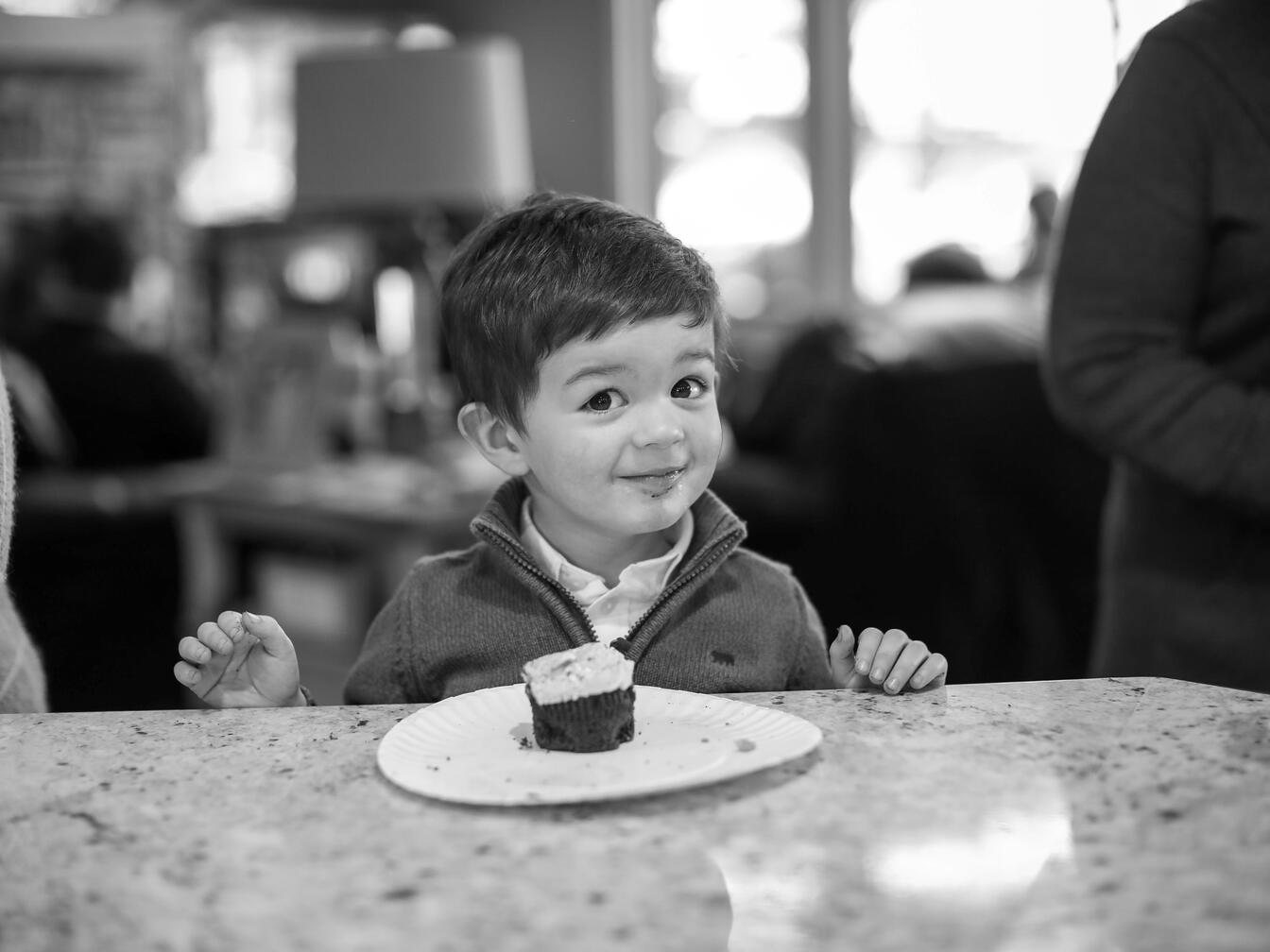
To a preschooler, money can look like magic. A grown-up taps a card or a phone, and the groceries come home. Cash, the one kind of money a child can see and hold, is getting rarer, too. In 2016, cash made up about a third of all U.S. consumer payments. By 2025 it was 14%, and just 10% for adults 25 to 54, according to the Federal Reserve’s 2026 Diary of Consumer Payment Choice. If you want your child to learn that money is real, that it runs out, and that it can be saved, you’ll need to put some in their hands.
The good news is that ages 3 to 5 are made for this. Preschoolers can learn that money is traded for things, that waiting can pay off, and that coins in a jar add up, as long as the lessons stay concrete, short, and safe. This guide is the second stage of The Age-By-Age Playbook to Financial Literacy. It picks up where The Infant Years (Ages 0-2) left off, when the work was mostly yours, and it covers this stage’s three big jobs: making money physical, practicing patience, and starting a first savings jar.
Why ages 3 to 5 matter for money
When the CFPB traced adult money skills back to childhood, it found three building blocks that develop in stages, and executive function comes first. In early childhood it’s the most important of the three for a child to develop, the agency says in its summary of that research, because it supports thinking about the future, perseverance, and planning. Executive function covers skills like working memory and self-control, the same skills a child needs to remember a goal and walk past the candy on the way to it. That research is the backbone of The Age-By-Age Playbook to Financial Literacy, which follows the same stages.
These skills grow fast at this age. Children’s executive function and self-regulation skills grow at a fast pace from 3 to 5, Harvard’s Center on the Developing Child notes in its activities guide, so match activities to your child. Younger preschoolers need lots of help with rules and structure, older ones can do more on their own, and the goal is to pull back your support as your child seems ready.
Money habits form early, too. A Cambridge University study for the UK’s government-backed Money Advice Service suggested that most children’s money habits are formed by about age 7, Gulf News reported. And self-control seems to matter for decades. In a long-term study of more than 1,000 New Zealand children, those who scored lower on self-control as young as age 3 were more likely to have financial troubles by age 32, ScienceDaily reported. Participants who found ways to improve their self-control as they grew did better than their childhood scores predicted, which is the hopeful part: these skills can be built.
None of this calls for lectures. Children 3 to 5 are usually too young to understand abstract financial concepts, the CFPB’s Money as You Grow guide for young children notes, but they’re building a foundation that can serve them well later. What they need is short, hands-on practice with real money, real waiting, and real choices. The table shows how that practice can grow from 3 to 5.
| Age | What to try |
|---|---|
| Age 3Money buys things | Name coins, hand money to a cashier, and start one clear save jarPractice waits of a few minutes |
| Age 4Money comes from work | Sort and stack coins, talk about your job, and add a spend jarPractice waits of a day or two |
| Age 5Saving takes a plan | Compare prices, sort needs from wants, and add a share jarPractice waits of a week or two |
| Ages 6 to 10Next: grade school | An allowance and four buckets: spend, save, invest, and giveCovered in the next stage |
Make money something they can hold
Debit and credit cards now account for about two-thirds of U.S. consumer payments, the Federal Reserve’s survey found, so most of your family’s money moves where your child can’t see it. A few cash purchases fix that. Look for places where paying with bills and coins is easy, like a farmers market, a bake sale, or a small purchase at a corner store, and let your child hand over the money and wait for the change. Watching money go out and something come back is the whole lesson at 3.
Safety first: coins are a choking hazard
Before the fun, one firm rule. The American Academy of Pediatrics lists coins among the choking hazards to keep away from babies and young children, on its parenting site, HealthyChildren.org. In a study of U.S. emergency department visits from 1995 to 2015, coins were the objects children under 6 swallowed most often, 62% of cases, followed by toys, jewelry, and batteries, Nationwide Children’s Hospital reported. Children 1 to 3 were the most likely to swallow something.
That doesn’t rule out real coins for preschoolers. It means an adult stays right there. Coin activities for preschoolers must be supervised by an adult, the Illinois Early Learning Project at the University of Illinois says in its tip sheet on learning about coins, and a few house rules make supervision easy:
- Count them out, count them back. Use a set number of coins for each activity, and count them back into the jar when you’re done.
- Stay low and close. Play at the table or on the floor, within arm’s reach, and keep sessions short.
- Store the jar up high. Keep it out of reach between sessions, especially if a younger sibling lives at home.
- Swap in play money if needed. If your child still puts things in their mouth, use paper bills or play money for now.
- Know who to call. Call 911 if your child is choking or struggling to breathe. If you think your child swallowed a coin, call your pediatrician or Poison Control at 1-800-222-1222, the first step Nationwide Children’s recommends.
Coin activities for preschoolers
Most preschoolers don’t yet know what money is worth or how it’s used, the Illinois tip sheet notes, so it suggests starting with coins as objects: washing, sorting, stacking, and looking closely. Harvard’s activities guide adds a twist that builds flexible thinking: sort by one rule, like color, then switch to a new rule. Pretend play, like running a store, helps too, because children practice following the rules of the roles they play, and the guide suggests planning the play first: who will be who, and what they’ll do. These six activities fit into a few minutes at the kitchen table:
| Activity | How to play |
|---|---|
| Coin washPennies first, then nickels | Wash a small pile of pennies in lukewarm, soapy water and talk about what your child noticesCompares color, size, and design |
| Sort, then switchOne rule, then another | Sort coins by color, mix them up, and sort again by sizePractices flexible thinking |
| Stacks of tenPennies and nickels | Build a stack of 10 pennies and a stack of 10 nickels, and see which is tallerPractices counting and comparing |
| Dice and stacksOn the floor | Take turns rolling a die and adding that many coins to your stackPractices counting and taking turns |
| Crayon rubbingsPaper and a crayon | Lay paper over a few coins and rub with the side of a crayonShows the details on each coin |
| Play storePlan it first | Decide who runs the shop and who buys, add price tags, and trade play money for goodsShows that money is traded for things |
Expect mix-ups about value. A nickel is bigger than a dime but worth less, a point worth saying out loud, suggests STEMIE, an early-childhood STEM resource from the University of North Carolina’s Frank Porter Graham Child Development Institute. The Illinois tip sheet adds that you can explain a nickel buys as much as five pennies, but not to be surprised if children don’t fully understand. That’s normal. In states that use the Common Core math standards, solving word problems with coins is a second-grade standard, so there’s no need to drill values now. Coin names, colors, and sizes, plus the idea that money buys things, are plenty.
Explain the money you can’t see
When you do tap a card or a phone, narrate it. The CFPB suggests telling young children that you need money to buy things and that you earn money by working. Add a sentence that connects the card to that idea: “This card takes money out of our bank account. It’s money we earned at work, and once we spend it, it’s gone.” You’re not teaching banking yet, just that the money behind the card is real.
Teach waiting, a little at a time
Saving is waiting with a purpose, and waiting is hard at 4. The best-known research on it began in the 1960s, when psychologist Walter Mischel and colleagues developed a simple test of preschoolers’ ability to delay gratification, as Mischel and his coauthors describe in a 2011 review. A child could eat one treat right away or wait for two. It became known as the marshmallow test, and later research added three findings that matter for parents.
A single test isn’t destiny
The test became famous because, in studies of children from a preschool on Stanford’s campus, those who waited longer did better as teenagers. In 2018, researchers revisited that link with a larger, more diverse group of children. Each extra minute a child waited at age 4 still predicted somewhat higher achievement at 15, but the link was only half as strong as in the original studies, and it shrank by two-thirds once the researchers accounted for family background, early cognitive ability, and the home environment, according to the study in Psychological Science. Links to behavior at 15 were much smaller and rarely statistically significant. A preschooler who eats the marshmallow isn’t doomed.
Children wait when waiting pays off
The second finding is the most useful one for parents. In a University of Rochester study published in 2013, 28 children ages 3 to 5 started with an art project, and a researcher promised to come back with better art supplies. For some children she did; for others she returned to say she didn’t have any better materials after all, Scientific American reported. Then came the marshmallow test.
Children who had seen the researcher keep her word waited about four times as long before eating the marshmallow, an average of about 12 minutes compared with about 3, and 9 of the 14 waited the full 15 minutes, compared with 1 of 14 in the broken-promise group, according to a summary by lead researcher Celeste Kidd. Similar children in earlier studies, with no evidence about the adult either way, waited about 6 minutes.
- Average wait
- The full 15-minute wait
Average time 3- to 5-year-olds waited before eating the first treat, on a 15-minute scale. The top and bottom bars are the two groups of 14 children in Kidd, Palmeri, and Aslin’s 2013 marshmallow study. The middle bar is the average Kidd’s team cited for similar children facing a similar choice in an earlier study (Shoda, Mischel, and Peake, 1990), with no evidence about the adult either way; procedures differed slightly.
See the numbers
| Group | Average wait |
|---|---|
| After broken promisesKidd and colleagues, 2013 | 3 min 2 sec |
| In earlier studiesShoda and colleagues, 1990 | 6 min 5 sec |
| After kept promisesKidd and colleagues, 2013 | 12 min 2 sec |
Kidd’s team read the results as a rational choice, not just a lack of self-control: waiting only makes sense if you believe the second marshmallow is really coming. That gives parents a clear job. When you promise that the jar money can buy the toy on Saturday, or that the wait ends when the timer rings, keep the promise, every time. Your reliability is what makes patience worth it.
How to make waiting easier
Mischel’s experiments also found strategies that help. Successful preschool waiters tended to distract themselves, for example by looking away from the treat, and focusing on a treat’s abstract, “cool” qualities made waiting easier than dwelling on how good it would taste, the 2011 review explains. Peers matter, too. In a University of Colorado Boulder study, 3- to 5-year-olds who were told their group had waited for a second marshmallow waited almost twice as long as children told their group hadn’t waited, the Association for Psychological Science reported. Here’s how to put those findings to work:
- Start tiny. Wait for a sand timer before a snack, then build to a day, then a week.
- Put the goal out of sight. Keep the toy catalog in a drawer and the jar on a shelf, so the temptation isn’t staring back all day.
- Give the wait a job. Sing a song, draw a picture of the goal, or play a game while the timer runs.
- Make waiting a family habit. Say “In our family, we save up for things,” and let your child see you wait for something, too.
- Keep your word. If the wait ends at the timer or on Saturday, make sure it does.
Set up a first savings jar
A savings jar turns waiting into something your child can watch. Choose a clear jar so every coin shows, and tape a picture of the goal to the front. Sesame Workshop’s three-jar activity, part of its money resources for young children, labels jars for spending, sharing, and saving, and suggests talking over time about the progress your child is making toward each goal. You don’t need all three jars on day one. Add them as your child grows:
- At 3, one jar: Save. Pick a goal that costs a few dollars and that your child can reach in a week or two, like stickers or a small toy.
- At 4, add Spend. Split each bit of money between the two jars, and let spend money really be spent, even on something you wouldn’t pick.
- At 5, add Share. A third jar for a friend’s birthday gift or a donation completes Sesame’s set.
- At 6 to 10, four buckets. Grade School (Ages 6-10) adds an invest bucket and an allowance.
Where the money comes from
A regular allowance can wait for grade school. For now, jar money can come from birthday cards, coins from a grandparent, or a small paid job that goes beyond everyday chores, like helping wash the car, which ties money to work. Pick one jar day each week to count the money together, and let your child drop in every coin.
Add a little growth
By 5, you can try a simple match: for every dollar your child saves toward the goal, you add a quarter. If the goal costs $5, your child needs to save only $4 to get there. A match makes saving more rewarding and plants the idea that money can grow while it waits, which How Does Compound Interest Actually Work for Minors? explains for later. Teenagers can graduate to a real match on money they earn, as The “Match” Program describes.
When the jar is full
Go buy the thing. Let your child carry the money, count it out at the register with your help, and carry the purchase home. This is the moment every wait has been building toward, and it’s also a promise kept. Then talk about what to save for next.
Talk about work, choices, needs, and wants
The CFPB’s Money as You Grow guide gives parents four simple ideas to talk about and try with children 3 to 5, and each fits into an ordinary day:
- Earning. You need money to buy things, and you earn money by working. Tell your child what you do at work and that it’s how your family gets money.
- Saving. You may have to wait and save up before you can buy something you want. The jar makes this one easy to point to.
- Planning. For big events and everyday activities, you need to think ahead about what you’ll need. Pack for an outing or plan a birthday party together.
- Shopping. Every time you spend money, you make a choice, and there’s a difference between things you need and things you want. Compare two cereals out loud and explain your pick.
The guide also names persistence, keeping at it even when a task is hard, as a money milestone to watch for at this age, so praise effort when your child sticks with a puzzle or a long wait. Needs and wants take patience of their own. The Cambridge study behind the age-7 finding also suggested that children under 8 hadn’t yet developed an understanding of the difference between luxuries and necessities, Gulf News reported. Treat “Is that a need or a want?” as a game you’ll keep playing for years, not a test to pass by kindergarten.
Read about money together
Picture books let preschoolers watch characters make money choices. The CFPB’s Money as You Grow Bookshelf pairs children’s books for ages 4 to 10 with downloadable parent reading guides that explain the key ideas and suggest questions and activities, and the books should be easy to find at a library or bookstore. These titles from its full book list work well for 4- and 5-year-olds:
| Book | Money idea |
|---|---|
| A Chair for My MotherVera B. Williams | A family saves coins in a big jar until they can buy a new chair |
| Curious George Saves His PenniesMargaret and H.A. Rey | Saving up, a little at a time, for something you want |
| Lemonade in WinterEmily Jenkins | Two kids sell lemonade and count their coins |
| Sheep in a ShopNancy Shaw | What to do when you don’t have enough money |
| The Berenstain Bears’ Trouble with MoneyStan and Jan Berenstain | Learning to save instead of spending it all |
A book also makes a good birthday gift at this age. If relatives ask what your child would like, a money picture book paired with a contribution to their savings covers both today and later.
Connect the jar to the nest egg
The jar is for lessons. The accounts you may have opened in the infant years, like a 529 plan or a custodial account, are for the future, and they keep working in the background. Keep your automatic deposit running, as Automating the Nest Egg explains, and if you haven’t chosen accounts yet, Comparing Investment Accounts for Kids walks through the options.
Birthdays are the natural bridge between the two. When birthday money arrives, let your child put a few coins or a dollar in the jar, then explain that the rest is going into savings for when they’re much older, where it can grow for years. At a hypothetical 7% average annual return, the model used throughout GoodNest’s guides, $150 in birthday gifts invested on each of your child’s third, fourth, and fifth birthdays, $450 in all, could grow to about $1,160 by age 18. Milestone Contributions and Structuring Milestone Contributions show how to plan around each occasion, and Discussing Wealth with Grandparents and The GoodNest Guide to Asking for Investments Instead of Toys offer wording for the ask.
GoodNest is built for this part of the plan. You create a page for your child and share one link with the people you choose, and the same page can stay with your child from the shower to graduation. Guests can give without creating an account, often alongside a small keepsake like a book, and the page keeps each gift with the giver’s name and note. GoodNest doesn’t hold or invest the money. Gifts go straight to you by Zelle, Venmo, or PayPal, and you move each gift into the account it’s meant for, with a few dollars for the jar if you like. For a preschooler, the notes are the best part. Read each one aloud, and let your child draw a thank-you picture for the giver to go with the thank-you GoodNest drafts in your child’s voice. A photo of the drawing makes a good postcard, which only the people who have given to your child can see. Thank You Notes and Portfolio Updates shows how to keep givers in the loop as their gifts grow, and Building Your Village covers the bigger picture.
Your early-years checklist
Before your child starts kindergarten, aim to check off each of these:
- Coins. Your child can name a few coins and knows that money is traded for things.
- A real purchase. Your child has handed money to a cashier and taken the change.
- Safety. Every coin activity is supervised, and the jar lives out of reach.
- Waiting. Your child has waited for a timer, then a day, then a week.
- The jar. A clear save jar has reached at least one goal, and the promised purchase happened.
- Work. You’ve told your child what you do at work and how it earns money.
- Choices. You’ve talked through a need, a want, and a choice at the store.
- Books. You’ve read at least one money picture book together.
- Family gifts. Relatives know how to give toward savings, and your child helped say thank you.
- Long-term savings. The automatic deposit you set up in the infant years is still running.
The bottom line
Ages 3 to 5 are when money stops being invisible. Put real coins in your child’s hands, always with you right there. Practice waits that start in minutes and stretch to a week, and keep every promise those waits depend on. Give your child a clear jar to watch fill, then let them spend it on the goal. Meanwhile, keep the long-term accounts growing and let birthdays connect the two. When your child is ready for an allowance and four buckets, the next stage of The Age-By-Age Playbook to Financial Literacy begins with Grade School (Ages 6-10).
Frequently asked questions
When should I start teaching my child about money?
Around age 3 is a good time to start, as long as the lessons stay concrete. The CFPB says children 3 to 5 are usually too young for abstract financial concepts but are building a foundation for later money skills, and a Cambridge University study suggested most children’s money habits are formed by about age 7. Start with real coins, short waits, and a clear savings jar.
How do I explain money to a 3-year-old?
Keep it simple and hands-on: people trade money for the things they need and want, and grown-ups earn money by working. Let your child hand money to a cashier and take the change, play store together, and name coins as you sort them. Save coin values for later, since coin word problems are a second-grade standard in states that use the Common Core.
Is it safe for preschoolers to play with coins?
Only with an adult right there. The American Academy of Pediatrics lists coins among the choking hazards to keep away from young children, and coins made up 62% of the objects children under 6 swallowed in a study of U.S. emergency department visits. Play at the table or on the floor, count coins out and back in, and store the jar out of reach. If you think your child swallowed a coin, call your pediatrician or Poison Control at 1-800-222-1222.
Does the marshmallow test predict success?
Less than its fame suggests. A 2018 study of a larger, more diverse group of children found the link between waiting at age 4 and achievement at 15 was half as strong as in the original studies, and it shrank by two-thirds after accounting for family background, early cognitive ability, and the home environment. Trust matters, too: in a 2013 study, preschoolers waited about four times as long when the adult had kept earlier promises. Practice waiting instead of testing it.
How many savings jars should a preschooler have?
Start with one clear jar for saving, with a picture of the goal taped to the front. Add a spend jar around age 4 and a share jar around 5, the three jars in Sesame Workshop’s activity for young children. A fourth bucket for investing fits better in grade school, along with an allowance.
Sources
- Federal Reserve Financial Services, Shaun O’Brien and Hailey Phelps, “2026 Findings from the Diary of Consumer Payment Choice” (May 2026).
- Consumer Financial Protection Bureau, “Four strategies to help youth achieve financial capability” (accessed October 3, 2026).
- Center on the Developing Child at Harvard University, “Executive Function Activities for 3- to 5-year-olds”, from its guide to enhancing and practicing executive function skills with children from infancy to adolescence (accessed October 3, 2026).
- Gulf News, “Money: Teach them while they’re young”, on the Money Advice Service and Cambridge University study (accessed October 3, 2026).
- ScienceDaily, “Childhood self-control predicts adult health and wealth” (January 25, 2011), on Moffitt and colleagues’ study in Proceedings of the National Academy of Sciences.
- Consumer Financial Protection Bureau, Money as You Grow, “Young children” (accessed October 3, 2026).
- HealthyChildren.org, American Academy of Pediatrics, “Choking Prevention” (accessed October 3, 2026).
- Nationwide Children’s Hospital, “Increase in Foreign Body Ingestions Among Young Children” (April 12, 2019), on Orsagh-Yentis and colleagues’ study in Pediatrics.
- Illinois Early Learning Project, University of Illinois Urbana-Champaign, “Math Sense: Learning about Coins” (reviewed 2023).
- STEMIE, Frank Porter Graham Child Development Institute, University of North Carolina at Chapel Hill, “Nickel” visual cue (accessed October 3, 2026).
- Common Core State Standards Initiative, Grade 2, Measurement & Data, Work with time and money, standard 2.MD.C.8 (accessed October 3, 2026).
- Walter Mischel and others, “‘Willpower’ over the life span: decomposing self-regulation”, Social Cognitive and Affective Neuroscience 6, no. 2 (2011).
- Tyler W. Watts, Greg J. Duncan, and Haonan Quan, “Revisiting the Marshmallow Test: A Conceptual Replication Investigating Links Between Early Delay of Gratification and Later Outcomes”, Psychological Science (published online May 25, 2018).
- Scientific American, “To Predict Success in Children, Look Beyond Willpower” (accessed October 3, 2026).
- Celeste Kidd, University of Rochester, “Synopsis of Rational Approaches to Learning and Development”, summarizing Kidd, Palmeri, and Aslin, “Rational snacking,” Cognition (2013) (accessed October 3, 2026).
- Association for Psychological Science, “Group norms influence individual self-control in children”, on Doebel and Munakata’s 2018 study in Psychological Science (accessed October 3, 2026).
- Sesame Workshop, “Three Jars” printable activity (accessed October 3, 2026).
- Consumer Financial Protection Bureau, “Money as You Grow Bookshelf” (accessed October 3, 2026).
- Consumer Financial Protection Bureau, “The books in Money as You Grow Bookshelf” (PDF) (accessed October 3, 2026).
This article is for general educational purposes only and is not financial, tax, legal, or medical advice. Children develop at different rates, so adapt activities to your child, and ask your pediatrician about safety questions. Coins are a choking hazard; supervise every coin activity. Projections use a hypothetical 7% average annual return, which is not guaranteed; actual returns vary and can be negative. Books, products, programs, and organizations named are examples, not endorsements. GoodNest does not provide investment, tax, or legal advice and does not hold or invest funds.
Part of Small children, 1 to 5.